Restless Thoughts
The Game
Phase 1
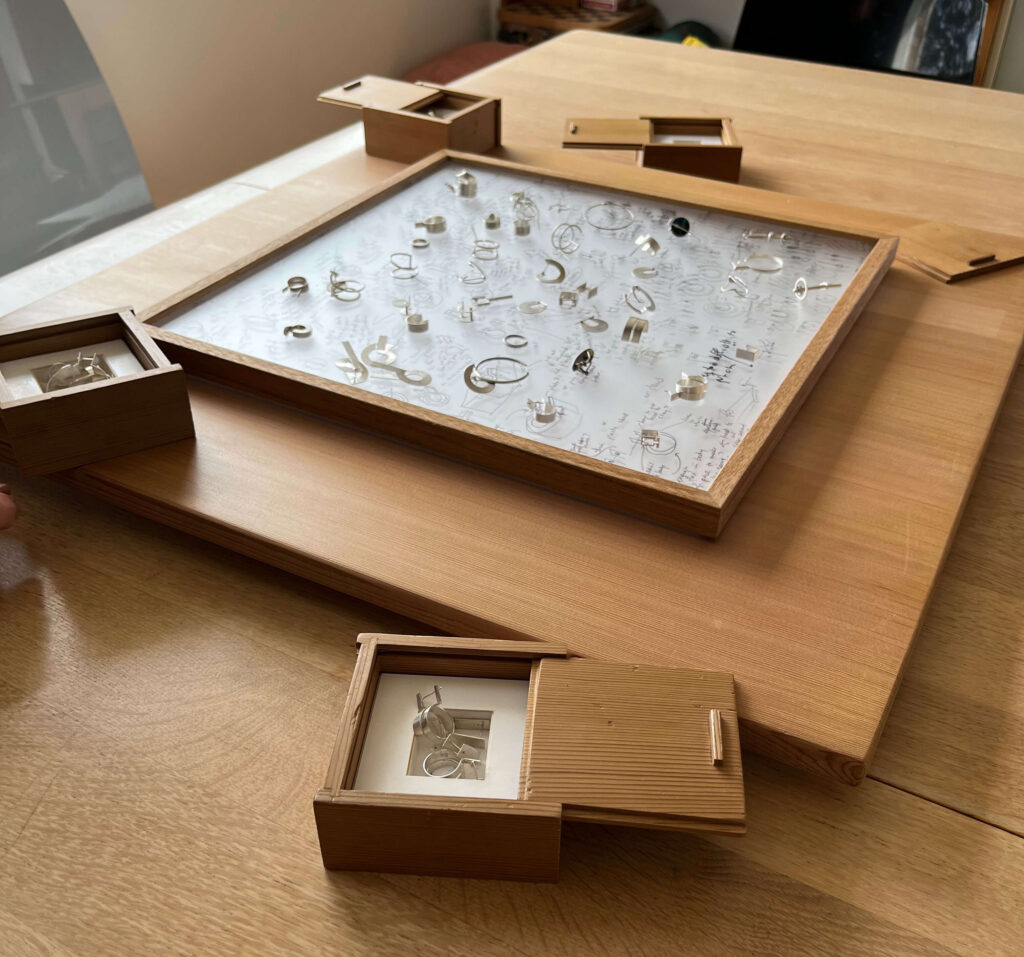
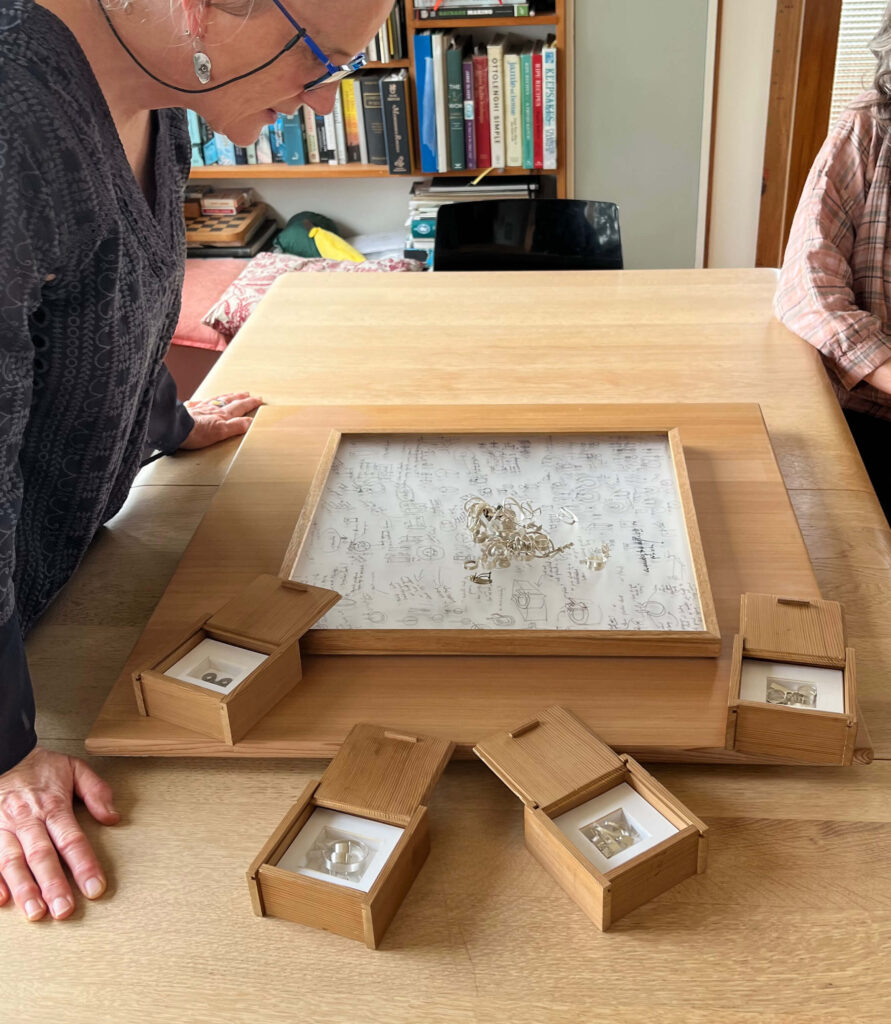
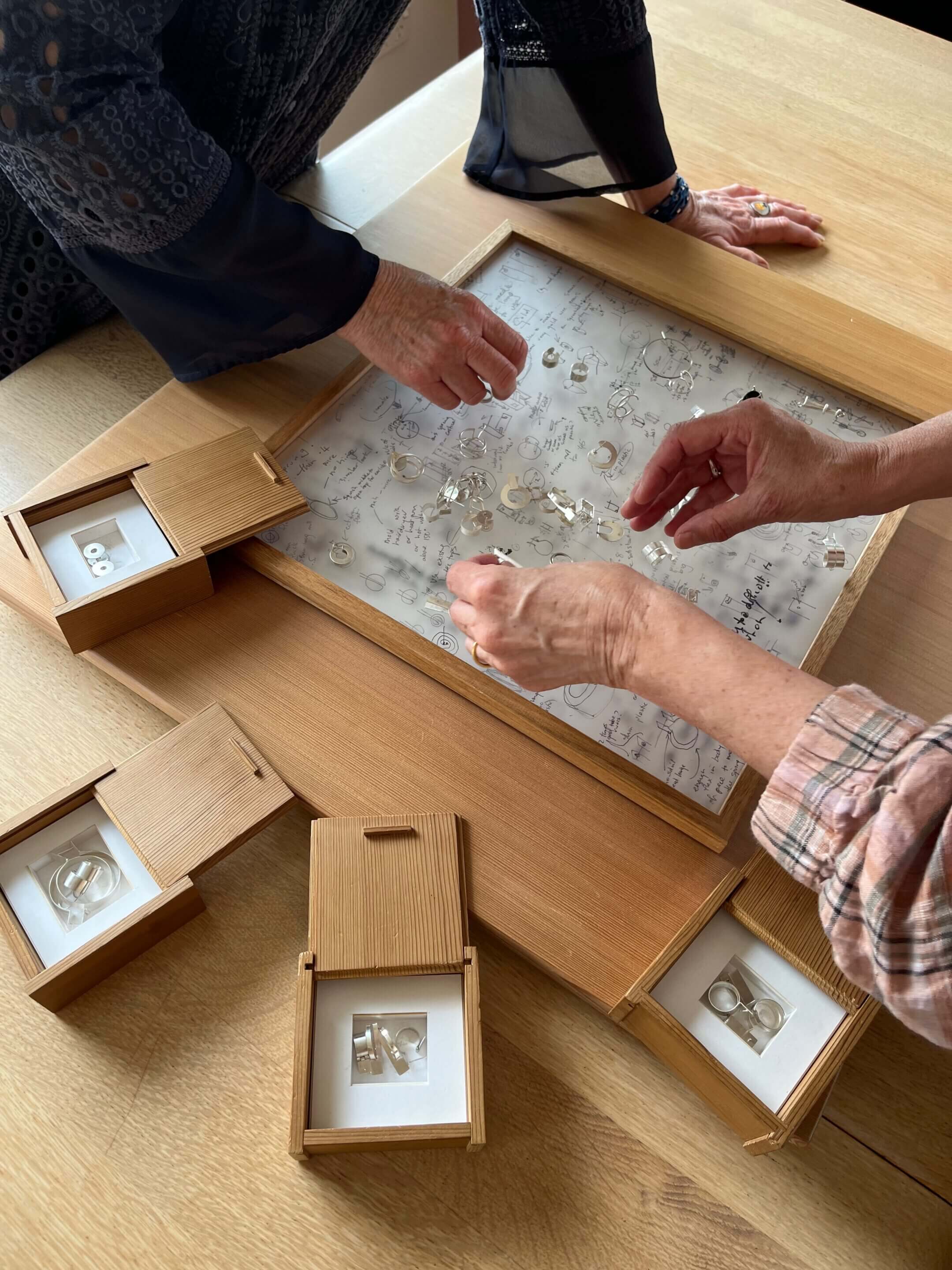
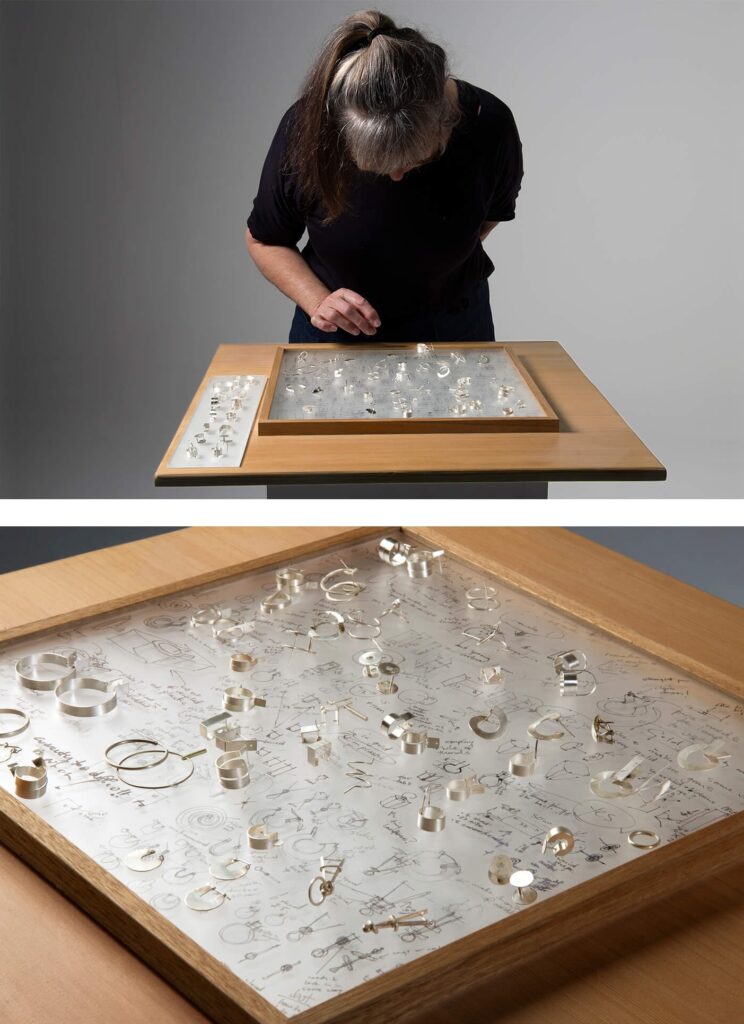
This work is about compulsive problem solving in liminal space and making ideas tangible. It is an example of transparent ‘black box’ thinking (learning from your mistakes). It invites the viewer to join the game, to match the prototypes and finished pieces to the preliminary sketches.
Creative thought processes are even more relevant now they are under threat by AI. We learn and innovate through thinking and physically making. It is a process, a kind of play. Now we are ‘giving over’ to AI and letting AI do our thinking, are we becoming less innovative?
How to make an earring with an integrated catch? To be light, secure and easy to wear.
This is a design problem that I want to solve. Technically and visually. There are so many possible solutions, many are already out there.
This question has kept my brain busy for the last three years off and on. It is a restless thought. My brain works on it without my knowledge, like recurring dreams, it comes back to it time and time again. I cannot abandon a restless thought.
The process though, involves giving up – giving up the illusion of control and discovering the liberation and limits of letting an idea run its course. Choice is resonant, physical, full of possibilities. Results aren’t instant. Springs, hinges, swivels, caps and more.
Sometimes painful, sometimes difficult, certainly complex, definitely not linear, for me full of joy.
It’s the opposite of swiping left or right, or putting a thought or problem to AI which immediately goes into the ‘AI black box’, (a different ‘black box’) where the internal decision making processes are NOT transparent.
‘AI Overview: Black box AI refers to artificial intelligence systems, often deep learning models, where the internal decision-making processes are opaque or indecipherable, even by their creators. While these systems are highly effective at tasks like pattern recognition and prediction, the “black box” nature means that the reasoning behind their outputs is hidden, leading to challenges in understanding, trusting, and ensuring fairness in critical applications.’
My brain, my ‘black box’, is transparent. I have limited control of the trajectories. It ebbs and flows in its own time, but the process is real, its tangible. Its in the layered drawings and the objects, the prototypes, the solutions. They all need to be touched, played and experimented with to understand.
I hope AI cant do what I have done here – I cant be sure.
Fran Allison Sept 2025